
July 15, 2022 NHTSA CAMPAIGN NUMBER: 22E058000
A propane leak in the presence of an ignition source can increase the risk of a fire.
NHTSA Campaign Number: 22E058
Manufacturer Engineered Controls International , LLC
, LLC
Components EQUIPMENT
Potential Number of Units Affected 9,500
Summary
Engineered Controls International, LLC (ECI) is recalling certain RegO propane service valves, part numbers 901C3 and 901C5. Due to incorrect thread depth, the service valves on the LPG tanks may not connect properly, which can cause a propane leak.
Remedy
ECI is working with the propane tank supplier, Manchester Tank, to provide replacement valves free of charge. Affected recreational vehicle manufacturers will be managing the recall repairs. Owners may contact their respective recreational vehicle manufacturer’s customer service numbers.
Notes
Owners may also contact the National Highway Traffic Safety Administration Vehicle Safety Hotline at 1-888-327-4236 (TTY 1-800-424-9153), or go to www.nhtsa.gov.
Inspection Procedure for Vehicles in Service with Propane in the Propane Tank
RegO Model 901C Service Valves
07/12/2022
What Should Be Done? Contact a professional to locate the service valve on the container to inspect the model number and date code to determine whether the valve is in scope (reference “Field Safety Advisory – RegO Model 901C Service Valves”). If the date code does not fall within the specified range, no further action is required. If the date code falls within the specified range, then follow the instructions below.
WARNING: FAILURE TO FOLLOW THESE STEPS AND REMOVE FROM SERVICE ANY CONTAINER THAT CONTAINS A LEAKING SERVICE VALVE COULD RESULT IN A FIRE OR EXPLOSION AND SERIOUS PERSONAL INJURY, PROPERTY DAMAGE, OR BOTH.
WARNING: IF YOU ARE NOT A PROPERLY TRAINED LP-GAS PROFESSIONAL, DO NOT ATTEMPT ANY OF THE STEPS OUTLINED BELOW, OR TO OTHERWISE INSPECT, TEST OR ALTER THE SERVICE VALVE ASSEMBLY. ATTEMPTING TO DO SO WITHOUT THE PROPER TRAINING COULD RESULT IN A FIRE OR EXPLOSION, AND SERIOUS PERSONAL INJURY, PROPERTY DAMAGE, OR BOTH.
- If the service valve is open (and the entire propane system is pressurized), apply a leak detection solution at the valve outlet connection.
- If no leaks are observed, no further action required.
- If a leak is observed at this valve outlet connection and tightening the connection does not stop the leak, close the service valve and contact your OEM, distributor, or dealer for further guidance.
- If the service valve is closed with propane in the propane tank, apply a leak detection solution at the valve outlet connection:
- If no leaks are observed, no further action required.
- If a leak is observed at this valve outlet connection and tightening the connection does not stop the leak, close the service valve and contact your OEM, distributor, or dealer for further guidance.
Should you have any questions, please contact your OEM supplier, distributor or dealer.
Sincerely,
Thom Hegman
Technical Advisor
100 RegO Drive, Elon, NC 27244 USA
Field Safety Advisory
RegO Model 901C Service Valves
06/27/2022
RegO has become aware of a potential issue with the female POL threads on a limited number of RegO model 901C3 and model 901C5 service valves. In some instances, the thread depth of the POL outlet is less than specification, which could result in a leak of propane. Potentially affected valves would have been installed in a limited number of Manchester Tank branded RV tanks dated 2021 and 2022. THIS COULD RESULT IN A FIRE OR EXPLOSION AND SERIOUS PERSONAL INJURY, PROPERTY DAMAGE, OR BOTH.
Which Valves May Be Affected? The affected valves have manufacturing date codes between 02X21 and 02X22. The ‘X’ represents any letter between A through E, which denotes the week of the month the valve was assembled. The date code is marked on a wrench flat. Below is a key to reading the date codes marked on the wrench flat of the valve and their locations. (See Figure 1.)
Figure 1: Model Number and Date Code Examples
What Should Be Done? Contact a professional to locate the service valve on the container to inspect the model number and date code to determine whether the valve is in scope. If the date code does not fall within the specified range, no further action is required. If the date code falls within the specified range, then follow the instructions below, depending on whether anything is installed in the outlet of the valve and whether there is container pressure.
WARNING: FAILURE TO FOLLOW THESE STEPS AND REMOVE FROM SERVICE ANY CONTAINER THAT CONTAINS A LEAKING SERVICE VALVE COULD RESULT IN A FIRE OR EXPLOSION AND SERIOUS PERSONAL INJURY, PROPERTY DAMAGE, OR BOTH.
WARNING: IF YOU ARE NOT A PROPERLY TRAINED LP-GAS PROFESSIONAL, DO NOT ATTEMPT ANY OF THE STEPS OUTLINED BELOW, OR TO OTHERWISE INSPECT, TEST OR ALTER THE SERVICE VALVE ASSEMBLY. ATTEMPTING TO DO SO WITHOUT THE PROPER TRAINING COULD RESULT IN A FIRE OR EXPLOSION, AND SERIOUS PERSONAL INJURY, PROPERTY DAMAGE, OR BOTH.
- If nothing is installed in the outlet of the valve:
a. Use the supplied go/no-go gauge POL nut to determine if the threads are the proper depth. (See Figure 2.) If the threads are not the proper depth, securely close the valve, remove the container from service, and replace the valve. Do not use the container without first replacing the valve.
Figure 2: Go/No Go Gauge POL Nut – Groove Cut Through Roll Stamp Information
b. Alternatively, close the service valve and attach a POL connector to the service valve outlet with an air fitting installed on the ¼” NPT threads. (See Figure 3.)
i. Apply 50-100 psi air pressure back towards the outlet of the valve;
ii. Use a leak detection solution to determine if this connection is leak tight;
iii. If the connection is not leak-tight, securely close the valve, remove the container from service, and contact your OEM, distributor, or dealer for further guidance. Do not use the container without first replacing the valve.
- If a POL connector is installed in the outlet of the valve and there is no container pressure:
a. Remove the POL connector from the outlet of the service valve and use the supplied go/no-go gauge POL nut to determine if the service valve threads are the proper depth. (See Figure 2).
i. If the threads are the proper depth, no further action is required.
ii. If the threads are not the proper depth, securely close the valve, remove the container from service, and contact your OEM, distributor, or dealer for further guidance.
b. Alternatively, close the service valve and attach a POL connector to the service valve outlet with an air fitting installed on the ¼” NPT threads. (See Figure 3)
i. Apply 50-100 psi air pressure back towards the outlet of the valve;
ii. Use a leak detection solution to determine if this connection is leak tight;
iii. If the connection is not leak-tight, securely close the valve, remove the container from service, and contact your OEM, distributor, or dealer for further guidance.
- If a POL connector is installed in the outlet of the valve and there is propane pressure in the container:
a. If the service valve is open (and the entire propane system is pressurized), use a leak detection solution at the valve outlet connection.
i. If no leaks are observed, no further action required.
ii. If a leak is observed at this valve outlet connection and tightening the connection does not stop the leak, close the service valve and contact your OEM, distributor, or dealer for further guidance.
b. If the service valve is closed:
i. Remove the POL connector from the outlet of the service valve and use the supplied go/no-go gauge POL nut to determine if the service valve threads are the proper depth. (See Figure 2 above.)
1. If the threads are the proper depth, no further action is required.
2. If the threads are not the proper depth, securely close the valve, remove the container from service, and contact your OEM, distributor, or dealer for further guidance.
ii. Alternatively, close the service valve and attach a POL connector to the service valve outlet with an air fitting installed on the ¼” NPT threads. (See Figure 3 above.)
1. Apply 50-100 psi air pressure back towards the outlet of the valve;
2. Use a leak detection solution to determine if this connection is leak tight;
3. If the connection is not leak-tight, securely close the valve, remove the container from service, and contact your OEM, distributor, or dealer for further guidance.
Should you have any questions, please contact your OEM supplier, distributor, dealer or RegO customer service at 336-449-7707 or [email protected]. Sincerely,
Thom Hegman
Technical Advisor
100 RegO Drive, Elon, NC 27244 USA
Chronology :
Evidence indicates that a tool change in February 2021 for a limited production run resulted in an incorrect thread depth for the affected valves. The tool was later de-installed and re-installed for the next production run in December 2021. There was no production run for this product between February 2021 and December 2021. After analyzing units produced after December 2021, ECI has determined that the tool was correctly reinstalled.
After learning of the issue, ECI tested all remaining units in stock and found no affected units.
Additionally, Manchester tested all of its remaining stock and, out of approximately 2,600 units, found 462 affected units. On June 28, 2022, ECI sent a field advisory to Manchester for its distribution to its customers.
The field advisory explains how to identify and test the service valves to determine whether they are affected by this issue. ECI has been informed that Manchester has circulated this field advisory to all of its customers.
ECI has further been informed that two of Manchester’s customers, Winnebago and Tiffin, conduct leak checks of propane tanks, including service valve assemblies, as part of their normal operating procedure. Winnebago received 2,400 potentially affected units and Tiffin received 2,151 potentially affected units, and to date, ECI has not been informed of any issues with those units.
ECI has no reason to believe that the units produced in or after December 2021 are affected by the incorrect thread depth issue. Nevertheless, out of an abundance of caution, ECI has included units produced through February 2022 within the recall.
1 Affected Product
Equipment
| BRAND | PART NO. | PRODUCTION DATES |
| REGO | 901C SERVICE VALVE | |
5 Associated Documents
Safety Bulletin
RCSB-22E058-5905.pdf 212.818KB
Recall 573 Report – 7/27/2022
RCLRPT-22E058-8658.PDF 215.789KB
Defect Notice 573 Report
RCLRPT-22E058-3976.PDF 214.064KB
Safety Bulletin
RCSB-22E058-5326.pdf 3188.15KB
Recall Acknowledgement
RCAK-22E058-6163.pdf 819.021KB
Latest Recalls Documents

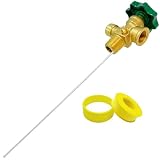
- Propane Tank Valve Built to Last – Solid Brass With Automatic/Manual Pressure Relief Valves/Heavy-Duty Handle: 100LB propane tank service valve coupler is forged from a single piece of brass for superior strength and durability.Rust- and leak-resistant, it’s built for tough outdoor use.The automatic and manual pressure relief valves add extra safety,while the heavy-duty easy-grip handle ensures smooth operation.Delivers safe,steady performance for grill, fryer,and other propane appliance.
- Propane Valve Easy & Safe Installation – No Special Tools Required: BBQHKCX propane tank service valve allows quick,hassle-free setup on your 100 lb propane tank.Perfect for a propane tank valve replacement,all you need is a basic wrench—no fancy tools needed.Replace an old,leaky valve on the spot and skip buying a new tank.It’s a simple upgrade with a tight,reliable seal solid performance.
- LP Tank Valve, Propane Tank Valve Replacement Leak-Free Confidence – Automatic Pressure Relief: Built with a 375 PSI automatic relief valve (435 PSI for propylene), this tank service valve offers dependable overpressure protection during use or refill. No guesswork, no stress—just clean, safe performance every time you connect. Note: After installation,perform a leak test and ensure the valve is fully tightened before use.
- LP Tank Valve, Propane Tank Valve Replacement Universal Fit – Standard POL (CGA510) Connection: Fits most 100 lb propane tanks and LP gas appliances. The standard POL connection makes setup quick and easy—no adapters needed. Perfect for BBQs, outdoor heaters, fryers, RVs, and backyard cooking, whether at home, on the farm, or at the job site. Reliable, safe, and ready for any propane setup.
- Propane Tank valve Heavy-Duty Control – Long Dip Tube & Solid Handwheel: The 10.2" dip tube pulls propane from deep in the tank for max fuel efficiency, while the thick, reinforced handwheel gives you solid, no-slip control when opening or closing the valve. Built tough to handle heavy-duty use in rough weather or rugged outdoor conditions, this propane tank service valve coupler won’t let you down.

- Built to Last – Solid Brass Construction:This YFLWGFDA 100LB propane tank service valve coupler is crafted from a single piece of forged brass for unbeatable strength and durability. It won’t rust, wear out, or leak—perfect for long-term outdoor use. Whether you're powering a grill, heater, or other propane appliances, it delivers safe, steady performance every time.
- Easy & Safe Installation – No Special Tools Required: YFLWGFDA propane tank service valve coupler is designed for quick, hassle-free setup on your 100 lb propane tank. All you need is a basic wrench—no fancy tools or pro skills needed. Replace an old, leaky valve on the spot and skip the cost of a new tank. It’s a simple upgrade that delivers a tight, reliable seal and solid performance right away.
- Leak-Free Confidence – Automatic Pressure Relief: Built with a 375 PSI automatic relief valve (435 PSI for propylene), this tank service valve offers dependable overpressure protection during use or refill. No guesswork, no stress—just clean, safe performance every time you connect.
- Universal Fit – Standard POL (CGA510) Connection: Compatible with most 100 lb LPG tanks and appliances. Whether you're firing up a BBQ, heater, or fryer, the standard POL connection fits right in without adapters. Perfect for home, RV, farm, or job site setups.
- Heavy-Duty Control – Reinforced Handwheel for Rugged Use: The thick, solid handwheel gives you firm, no-slip control when opening or closing the valve—even with gloves on or in tough weather. Built for heavy-duty use in outdoor environments, this propane tank service valve coupler delivers reliable performance when it matters most.

- Replacement service valve for forklift tanks

- Built to Last – Solid Brass Construction:This YFLWGFDA 100LB propane tank service valve coupler is crafted from a single piece of forged brass for unbeatable strength and durability. It won’t rust, wear out, or leak—perfect for long-term outdoor use. Whether you're powering a grill, heater, or other propane appliances, it delivers safe, steady performance every time.
- Easy & Safe Installation – No Special Tools Required: YFLWGFDA propane tank service valve coupler is designed for quick, hassle-free setup on your 100 lb propane tank. All you need is a basic wrench—no fancy tools or pro skills needed. Replace an old, leaky valve on the spot and skip the cost of a new tank. It’s a simple upgrade that delivers a tight, reliable seal and solid performance right away.
- Leak-Free Confidence – Dual Safety Venting: Equipped with both a built-in manual bleeder valve and an automatic 375 PSI relief valve (435 PSI for propylene), this tank service valve ensures safe, clean venting during refills and automatic pressure release when needed. No guesswork, no stress—just reliable protection every time you connect.
- Universal Fit – Standard POL (CGA510) Connection: Compatible with most 100 lb LPG tanks and appliances. Whether you're firing up a BBQ, heater, or fryer, the standard POL connection fits right in without adapters. Perfect for home, RV, farm, or job site setups.
- Heavy-Duty Control – Long Dip Tube & Solid Handwheel: The 10.2" dip tube pulls propane from deep in the tank for max fuel efficiency, while the thick, reinforced handwheel gives you solid, no-slip control when opening or closing the valve. Built tough to handle heavy-duty use in rough weather or rugged outdoor conditions, this propane tank service valve coupler won’t let you down.
SEOCONTENT-START
Inspection Procedure for Vehicles in Service with
Propane in the Propane Tank
RegO Model 901C Service Valves 07/12/2022
What Should Be Done? Contact a professional to locate the service valve on the container to inspect the model number and date code to determine whether the valve is in scope (reference “Field Safety Advisory – RegO Model 901C Service Valves”). If the date code does not fall
within the specified range, no further action is required. If the date code falls within the specified range, then follow the instructions below. WARNING: FAILURE TO FOLLOW THESE STEPS AND REMOVE FROM SERVICE ANY CONTAINER THAT CONTAINS A LEAKING SERVICE VALVE COULD RESULT IN A FIRE OR EXPLOSION AND SERIOUS PERSONAL INJURY, PROPERTY DAMAGE, OR BOTH. WARNING: IF YOU ARE NOT A PROPERLY TRAINED LP-GAS PROFESSIONAL, DO NOT ATTEMPT ANY OF THE STEPS OUTLINED BELOW, OR TO OTHERWISE INSPECT, TEST OR ALTER THE SERVICE VALVE ASSEMBLY. ATTEMPTING TO DO SO WITHOUT THE PROPER TRAINING COULD RESULT IN A FIRE OR EXPLOSION, AND SERIOUS PERSONAL INJURY, PROPERTY DAMAGE, OR BOTH. 1. If the service valve is open (and the entire propane system is pressurized), apply a leak detection solution at the valve outlet connection.
a. If no leaks are observed, no further action required.
b. If a leak is observed at this valve outlet connection and tightening the connection does not stop the leak, close the service valve and contact your OEM, distributor, or dealer for further guidance. 2. If the service valve is closed with propane in the propane tank, apply a leak detection solution at the valve outlet connection:
a. If no leaks are observed, no further action required.
b. If a leak is observed at this valve outlet connection and tightening the connection does not stop the leak, close the service valve and contact your OEM, distributor, or dealer for further guidance. Should you have any questions, please contact your OEM supplier, distributor or dealer.
Sincerely, Thom Hegman
Technical Advisor
100 RegO Drive, Elon, NC 27244 USA
ECI2022-002
**************************************************************************************************************
Field Safety Advisory
RegO Model 901C Service Valves
06/27/2022
RegO has become aware of a potential issue with the female POL threads on a limited number of RegO model 901C3 and model 901C5 service valves. In some instances, the thread depth of the POL outlet is less than specification, which could result in a leak of propane. Potentially affected valves would have been installed in a limited number of Manchester Tank branded RV tanks dated 2021 and 2022. THIS COULD RESULT IN A FIRE OR EXPLOSION AND SERIOUS PERSONAL INJURY, PROPERTY DAMAGE, OR BOTH. Which Valves May Be Affected? The affected valves have manufacturing date codes between 02X21 and 02X22. The ‘X’ represents any letter between A through E, which denotes the week of the month the valve was assembled. The date code is marked on a wrench flat. Below is a key to reading the date codes marked on the wrench flat of the valve and their locations. (See Figure 1.)
Figure 1: Model Number and Date Code Examples What Should Be Done? Contact a professional to locate the service valve on the container to inspect the model number and date code to determine whether the valve is in scope. If the date
Date Code and Model Number Location (Flats)
Valve Outlet Connection (POL Threads)
ECI2022-001 ECI2022-001 code does not fall within the specified range, no further action is required. If the date code falls within the specified range, then follow the instructions below, depending on whether anything is installed in the outlet of the valve and whether there is container pressure. WARNING: FAILURE TO FOLLOW THESE STEPS AND REMOVE FROM SERVICE ANY CONTAINER THAT CONTAINS A LEAKING SERVICE VALVE COULD RESULT IN A FIRE OR EXPLOSION AND SERIOUS PERSONAL INJURY, PROPERTY DAMAGE, OR BOTH. WARNING: IF YOU ARE NOT A PROPERLY TRAINED LP-GAS PROFESSIONAL, DO NOT ATTEMPT ANY OF THE STEPS OUTLINED BELOW, OR TO OTHERWISE INSPECT, TEST OR ALTER THE SERVICE VALVE ASSEMBLY. ATTEMPTING TO DO SO WITHOUT THE PROPER TRAINING COULD RESULT IN A FIRE OR EXPLOSION, AND SERIOUS PERSONAL INJURY, PROPERTY DAMAGE, OR BOTH. 1. If nothing is installed in the outlet of the valve:
a. Use the supplied go/no-go gauge POL nut to determine if the threads are the proper depth. (See Figure 2.) If the threads are not the proper depth, securely close the valve, remove the container from service, and replace the valve. Do not use the container without first replacing the valve. Go/No Go gauge Finger Tight No Visible Groove = Good Part Go/No Go gauge Finger Tight = Needs Replacement Figure 2: Go/No Go Gauge POL Nut – Groove Cut Through Roll Stamp Information ECI2022-001 b. Alternatively, close the service valve and attach a POL connector to the service valve outlet with an air fitting installed on the ¼” NPT threads. (See Figure 3.)
i. Apply 50-100 psi air pressure back towards the outlet of the valve;
ii. Use a leak detection solution to determine if this connection is leak tight;
iii. If the connection is not leak-tight, securely close the valve, remove the container from service, and contact your OEM, distributor, or dealer for further guidance. Do not use the container without first replacing the valve. POL connector POL threads
POL connector
¼” NPT threads Figure 3: POL Connector for Air Test 2. If a POL connector is installed in the outlet of the valve and there is no container pressure:
a. Remove the POL connector from the outlet of the service valve and use the supplied go/no-go gauge POL nut to determine if the service valve threads are the proper depth. (See Figure 2).
i. If the threads are the proper depth, no further action is required.
ii. If the threads are not the proper depth, securely close the valve, remove the container from service, and contact your OEM, distributor, or dealer for further guidance. b. Alternatively, close the service valve and attach a POL connector to the service valve outlet with an air fitting installed on the ¼” NPT threads. (See Figure 3)
i. Apply 50-100 psi air pressure back towards the outlet of the valve;
ii. Use a leak detection solution to determine if this connection is leak tight;
iii. If the connection is not leak-tight, securely close the valve, remove the container from service, and contact your OEM, distributor, or dealer for further guidance. 3. If a POL connector is installed in the outlet of the
valve and there is propane pressure in the container:
a. If the service valve is open (and the entire propane system is pressurized), use a leak detection solution at the valve outlet connection.
i. If no leaks are observed, no further action required.
ii. If a leak is observed at this valve outlet connection and tightening the connection does not stop the leak, close the service valve and contact your OEM, distributor, or dealer for further guidance. b. If the service valve is closed:
i. Remove the POL connector from the outlet of the service valve and use the supplied go/no-go gauge POL nut to determine if the service valve threads are the proper depth. (See Figure 2 above.)
1. If the threads are the proper depth, no further action is required.
2. If the threads are not the proper depth, securely close the valve, remove the container from service, and contact your OEM, distributor, or dealer for further guidance. ii. Alternatively, close the service valve and attach a POL connector to the service valve outlet with an air fitting installed on the ¼” NPT threads. (See Figure 3 above.)
1. Apply 50-100 psi air pressure back towards the outlet of the valve;
2. Use a leak detection solution to determine if this connection is leak tight;
3. If the connection is not leak-tight, securely close the valve, remove the container from service, and contact your OEM, distributor, or dealer for further guidance. Should you have any questions, please contact your OEM supplier, distributor, dealer or RegO customer service at 336-449-7707 or [email protected].
Sincerely,
Thom Hegman
Technical Advisor 100 RegO Drive, Elon, NC 27244 USA
ECI2022-001
**************************************************************************************************************
OMB Control No.: 2127-0004
Part 573 Safety Recall Report 22E-058
The information contained in this report was submitted pursuant to 49 CFR §573
Manufacturer Name : Submission Date :
Engineered Controls International, LLC JUL 27, 2022 NHTSA Recall No. : 22E-058 Manufacturer Recall No. : NR Manufacturer Information :
Manufacturer Name : Engineered Controls International,
LLC
Address : 100 Rego Drive
Elon NC 27244
Company phone : 336-449-7707 Population :
Number of potentially involved : 9,500 Estimated percentage with defect : 10 % Equipment Information : Brand / Trade 1 :
Model : RegO
901C Service Valves Part No. : 901C3, 901C5 Size : NR Function : NR
Descriptive Information : The potentially impacted equipment are the Female POL threads on a limited number of RegO model 901C3 and model 901C5 service valves, which are used on Manchester Tank branded propane tanks installed in RVs, food and catering trucks, and a small number of other vehicles. The affected valves have manufacturing date codes between 02X21 and 02X22 . The ‘X’ represents any letter between A through E, which denotes the week of the month the valve was assembled. The date code is marked on a wrench flat. Evidence indicates that a tool change in February 2021 for a limited production run resulted in an incorrect thread depth for the affected valves. The tool was later de-installed and re-installed for the next production run in December 2021. There was no production run for this product between February 2021 and December 2021.
After analyzing units produced after December 2021, ECI has determined that the tool was correctly re-installed. ECI has no reason to believe that the units produced in or after December 2021 are affected by the incorrect thread depth issue. Nevertheless, out of an abundance of caution, ECI has included units produced through February 2022 within the recall.
Production Dates : FEB 01, 2021 – FEB 28, 2022
Description of Defect :
Description of the Defect : In some instances, the thread depth of the POL outlet is less than specification,
which could result in a leak of propane. Part 573 Safety Recall Report 22E-058 Page 2 FMVSS 1 : NR FMVSS 2 : NR
Description of the Safety Risk : The use of the affected Valve could cause leakage of propane leading to an
explosion or fire risk. It is likely that the part would have been found if used in the field because of sound, smell, and loss of propane. Originally, ECI was under impression that all affected Valves had been segregated and not distributed, but has since learned that a small number of units entered the field.
Description of the Cause : Evidence indicates that a tool change in February 2021 for a limited production run resulted in an incorrect thread depth for the affected valves. Identification of Any Warning
that can Occur : It is likely that the affected part would have been found if used in the field because of sound, smell, and loss of propane. Involved Components : Component Name : 901C Service Valves
Component Description : Service Valves used on RV propane tanks Component Part Number : 901C3, 901C5 Supplier Identification : Component Manufacturer
Name : Engineered Controls International, LLC Address : 100 RegO Drive
Elon North Carolina 27244
Country : United States Chronology :
Evidence indicates that a tool change in February 2021 for a limited production run resulted in an incorrect thread depth for the affected valves. The tool was later de-installed and re-installed for the next production run in December 2021. There was no production run for this product between February 2021 and December 2021. After analyzing units produced after December 2021, ECI has determined that the tool was correctly re- installed. After learning of the issue, ECI tested all remaining units in stock and found no affected units.
Additionally, Manchester tested all of its remaining stock and, out of approximately 2,600 units, found 462 affected units. On June 28, 2022, ECI sent a field advisory to Manchester for its distribution to its customers. The field advisory explains how to identify and test the service valves to determine whether they are affected by this issue. ECI has been informed that Manchester has circulated this field advisory to all of its customers. The information contained in this report was submitted pursuant to 49 CFR §573 Part 573 Safety Recall Report 22E-058 Page 3 ECI has further been informed that two of Manchester’s customers, Winnebago and Tiffin, conduct leak checks of propane tanks, including service valve assemblies, as part of their normal operating procedure. Winnebago received 2,400 potentially affected units and Tiffin received 2,151 potentially affected units, and to date, ECI has not been informed of any issues with those units.
ECI has no reason to believe that the units produced in or after December 2021 are affected by the incorrect thread depth issue. Nevertheless, out of an abundance of caution, ECI has included units produced through February 2022 within the recall. Description of Remedy :
Description of Remedy Program : A Field Safety Advisory warning about the thread depth issue and advising
how to remedy the issue was sent to Manchester Tank, the only customer who received the affected valves. Manchester Tank is distributing the field safety advisory to its customers. Reimbursement and other issues with regard to the ultimate end consumer will be handled by other entities, including the RV manufacturers and/or their sales/service centers. ECI’s expectation is that they’ll handle reimbursement pursuant to their contracts and warranties with the ultimate end consumer. How Remedy Component Differs from Recalled Component :
Identify How/When Recall Condition was Corrected in Production : The threading of the recalled Valve was incorrect. The remedy or replacement Valve has the correct thread depth.
Evidence indicates that a tool change in February 2021 for a limited production run resulted in an incorrect thread depth for the affected valves. The tool was later de-installed and re-installed in December 2021. After analyzing units produced after December 2021, ECI has determined that the tool was correctly re-installed. ECI has no reason to believe that the units produced after December 2021 are affected by the incorrect thread depth issue. Nevertheless, out of an abundance of caution, ECI has included units produced through February 2022 within the recall. Recall Schedule :
Description of Recall Schedule : Manchester Tank was notified on June 28, 2022 of the recall. ECI sent a
field safety advisory, notifying the company of the recall and describing how to remedy the issue. It is ECI’s understanding that Manchester Tank notified all of its customers. Notification of dealers and owners is not within ECI’s control.
Planned Dealer Notification Date : NR – NR Planned Owner Notification Date : NR – NR Purchaser Information :
The following manufacturers purchased this defective/noncompliant equipment for possible use or installation in new motor vehicles or new items of motor vehicle equipment: The information contained in this report was submitted pursuant to 49 CFR §573 Part 573 Safety Recall Report 22E-058
Page 4
The information contained in this report was submitted pursuant to 49 CFR §573
Name : Manchester Tank Address : 1000 Corporate Center Dr. Ste. 300 Franklin TN 37067 Country : US Company Phone : NR
* NR – Not Reported
**************************************************************************************************************
OMB Control No.: 2127-0004
Part 573 Safety Recall Report 22E-058
The information contained in this report was submitted pursuant to 49 CFR §573
Manufacturer Name : Submission Date :
Engineered Controls International, LLC JUL 15, 2022 NHTSA Recall No. : 22E-058 Manufacturer Recall No. : NR Manufacturer Information :
Manufacturer Name : Engineered Controls International,
LLC
Address : 100 Rego Drive
Elon NC 27244
Company phone : 336-449-7707 Population :
Number of potentially involved : 9,500 Estimated percentage with defect : NR Equipment Information : Brand / Trade 1 :
Model : RegO
901C Service Valves Part No. : 901C3, 901C5 Size : NR Function : NR
Descriptive Information : The potentially impacted equipment are the Female POL threads on a limited number of RegO model 901C3 and model 901C5 service valves, which are used on Manchester Tank branded propane tanks installed in RVs, food and catering trucks, and a small number of other vehicles. The affected valves have manufacturing date codes between 02X21 and 02X22 . The ‘X’ represents any letter between A through E, which denotes the week of the month the valve was assembled. The date code is marked on a wrench flat. Evidence indicates that a tool change in February 2021 for a limited production run resulted in an incorrect thread depth for the affected valves. The tool was later de-installed and re-installed for the next production run in December 2021. There was no production run for this product between February 2021 and December 2021.
After analyzing units produced after December 2021, ECI has determined that the tool was correctly re-installed. ECI has no reason to believe that the units produced in or after December 2021 are affected by the incorrect thread depth issue. Nevertheless, out of an abundance of caution, ECI has included units produced through February 2022 within the recall.
Production Dates : FEB 01, 2021 – FEB 28, 2022
Description of Defect :
Description of the Defect : In some instances, the thread depth of the POL outlet is less than specification,
which could result in a leak of propane. Part 573 Safety Recall Report 22E-058 Page 2 FMVSS 1 : NR FMVSS 2 : NR
Description of the Safety Risk : The use of the affected Valve could cause leakage of propane leading to an
explosion or fire risk. It is likely that the part would have been found if used in the field because of sound, smell, and loss of propane. Originally, ECI was under impression that all affected Valves had been segregated and not distributed, but has since learned that a small number of units entered the field.
Description of the Cause : Evidence indicates that a tool change in February 2021 for a limited production run resulted in an incorrect thread depth for the affected valves. Identification of Any Warning
that can Occur : It is likely that the affected part would have been found if used in the field because of sound, smell, and loss of propane. Involved Components : Component Name : 901C Service Valves
Component Description : Service Valves used on RV propane tanks Component Part Number : 901C3, 901C5 Supplier Identification : Component Manufacturer
Name : Engineered Controls International, LLC Address : 100 RegO Drive
Elon North Carolina 27244
Country : United States Chronology :
NR Description of Remedy :
Description of Remedy Program : NR How Remedy Component Differs NR from Recalled Component : The information contained in this report was submitted pursuant to 49 CFR §573 Part 573 Safety Recall Report 22E-058
Page 3
The information contained in this report was submitted pursuant to 49 CFR §573
Identify How/When Recall Condition was Corrected in Production :
NR
Recall Schedule :
Description of Recall Schedule : Manchester Tank was notified on June 28, 2022 of the recall. ECI sent a
field safety advisory, notifying the company of the recall and describing how to remedy the issue.
Planned Dealer Notification Date : NR – NR Planned Owner Notification Date : NR – NR Purchaser Information :
The following manufacturers purchased this defective/noncompliant equipment for possible use or installation in new motor vehicles or new items of motor vehicle equipment:
Name : Manchester Tank Address : 1000 Corporate Center Dr. Ste. 300 Franklin TN 37067 Country : US Company Phone : NR
* NR – Not Reported
SEOCONTENT-END
This product presentation was made with AAWP plugin.