
NHTSA ID Number: 10118230
Manufacturer Communication Number: 059-906-00_9-17
Summary
New Service Instructions for Brake Bleeding of UFP Actuators
1 Affected Product
Equipment
SERVICE INSTRUCTIONS
Brake Bleeding of UFP Actuators
Manual Bleeding of the Brake System
Two people will be required to bleed the brakes if bleeding is to be performed conventionally by manually operating the actuator.
- Jack up trailer and secure on adequate capacity jack stands. Follow trailer manufacturers recommendations for lifting and supporting the unit.
| CAUTION |
| Do not lift or support the trailer on any part of the axle or suspension system. Never go under any trailer unless it is properly supported on jack stands which have been rated for the load. Improperly supported vehicles can fall unexpectedly and cause serious injury or death. |
To facilitate bleeding of the trailer’s disc brake system, it is helpful if the actuator is lower than the disc brake calipers. It is easier to push the air in the system up and out rather than trying to force the air down. It is also important that any rubber flexible brake lines are routed such that the line does not slope up before sloping down, which would create a pocket where air can get trapped.
Before starting, make sure the brake calipers are properly installed with the bleeder valves on the top side of the caliper. (The calipers are universal and could have been incorrectly installed upside down.)
If you are not skilled in performing the following procedures, have a qualified service shop perform the job.
- Remove the master cylinder reservoir plug and fill the reservoir with brake fluid
 . Use either DOT 3 or DOT 4 automotive brake fluid. Follow instructions on brake fluid container. Avoid shaking brake fluid container and pour fluid slowly to minimize air entrapment. Let fluid in reservoir stand until completely free of air bubbles.
 - IMPORTANT: Before bleeding brake lines, bleed the actuator master cylinder. Insert a screw driver through hole in bottom of inner member and use short strokes to pry on pushrod (while holding safety release bracket up) until no air bubbles are seen coming from small orifice hole in the bottom of the master cylinder reservoir.
- Start bleeding procedure on the brake furthest from the master cylinder.
- At the brake assembly, connect a transparent bleeder hose to bleed screw fitting on caliper and submerge free end into a container partially filled with brake fluid. Do not reuse this fluid.
- The first person strokes the pushrod slowly while holding safety release bracket up.
The second person opens the bleed screw fitting, then closes the bleed screw fitting BEFORE the first person SLOWLY releases the pushrod. Repeat this procedure until the fluid expelled from the bleeder hose is free of air bubbles.
Remember to always tighten the bleeder screw before releasing the pushrod. During this procedure, the master cylinder reservoir fluid level must be maintained at no less than ¹⁄₂ full.
- Repeat steps 4 and 5 for the other brake and the brakes on the front axle, if equipped with tandem brake axles.
- If installation is tandem axle with brakes on both axles, repeat bleeding procedure on rear axle brakes for the second time to assure purging of all air in system.
- As a final check after bleeding is completed, stroke pushrod and check to be sure brake system is pressurized by attempting to rotate a tire.
- Push up on the safety release bracket to ensure that pushrod is in released position.
- After bleeding has been completed, recheck fluid level in master cylinder. Fill the master cylinder reservoir to indicator on reservoir plug. Do not overfill.
| CAUTION |
| Do not use brake fluid drained from brake system to refill master cylinder reservoir as such fluids contain contaminants from system which may result in brake failure or costly repairs. |
Be sure to check the brake fluid often when bleeding, as the reservoir is small and will run out quickly if brake lines are empty. If it runs out of fluid, air will be introduced again into the brake lines and the process will need to be started over.
Important: When finished bleeding the brakes, press the release one last time so the brakes will be “off” when the trailer is towed.
Pressure Bleeding of the Brake System
The procedure below assumes that a power bleeder will be used.
- To facilitate bleeding of the trailer’s disc brake system, it is helpful if the actuator is lower than the disc brake calipers. It is easier to push the air in the system up and out rather than trying to force the air down. It is also important that any rubber flexible brake lines are routed such that the line does not slope up before sloping down, which would create a pocket where air can get trapped.
Before starting, make sure the brake calipers are properly installed with the bleeder valves on the top side of the caliper. (The calipers are universal and could have been incorrectly installed upside down.)
- Bench bleeding the actuator prior to installation will also speed bleeding of the brake system.
- A single person can accomplish bleeding the brake system if a power bleeder and UFP’s bleeder clamp assembly are used. The pressure in the power bleeder should not exceed 18 psi. Exceeding this pressure will damage the diaphragm in the master cylinder reservoir, causing it to leak.
Always use clean DOT 3 or DOT 4 brake fluid.
Never reuse old fluid, as it will contain contaminants and water moisture. Always seal fluid containers as soon as possible as brake fluid is hygroscopic and readily absorbs moisture.
- Attach bleeder clamp assembly to actuator. Make sure clamp assembly is adjusted properly. If clamp is too tight, it will crush and damage the master cylinder reservoir cover plate. If the clamp is too loose, it will not seal properly and may leak fluid when bleeding the brake system.
- Turn on valve at pressure bleeder and check for leaks where the bleeder head enters the master cylinder reservoir.
- Start bleeding with the brake at the farthest end of the brake line. If trailer has tandem brake axles, start with the brake at the farthest end of the brake line on the rear axle first.
- At the disc brake caliper assembly, connect a clear bleeder hose to the bleeder screw located on top of caliper body and place free end of hose in a suitable container.
Note: Do not reuse the brake fluid that collects in the container during the bleeding process.
- Repeat steps 6 and 7 above on brake on the opposite side of axle and then on front axle if so equipped.
- If installation is tandem axle with brakes on both axles, repeat bleeding procedure on the rear axle brakes for the second time to assure positive purging of all air from system.
- Relieve pressure in bleeder pot. Close valve at bleeder head. Slowly remove bleeder clamp assembly so as not to spill fluid.
- Check fluid level. Not enough fluid in the reservoir will cause the reservoir to run dry as the disc brake pads wear. Too much fluid will cause an overflow situation when the solenoid valve is energized during backing up.
Proper fluid level is when the fluid in the reservoir just touches the end of the dip stick on the fill plug when it is inserted fully into the fill hole.
- Wipe off any brake fluid that may have spilled on the top of the reservoir or actuator body.
- Proper bleeding of brake system can be checked by performing one of the following procedures:
- Compress actuator and verify brake rotor can not be rotated.
- Stroke pushrod assembly with a screwdriver and verify brake rotor can not be rotated.
Note: If using this procedure, make sure you push up on the pushrod release bracket afterward to fully release the brakes.
- Temporarily disconnect the tow vehicle/ trailer electrical connector and back up the trailer (without energizing the backing solenoid valve), to verify brakes are working.
- Pull trailer forward and stop suddenly, pin on side of actuator should not travel more than ¹⁄₂ way in slot for single brake axle or ³⁄₄ way in slot for tandem brake axles.
- If brakes are not working properly, there is still air in the brake system and the system will have to be re-bled.
- After initial trailer braking test, recheck fluid in actuator and refill as necessary. Occasionally, if the calipers were not initially set as suggested in step “A”, the fluid required to fully extend the calipers will exceed the capacity of the master cylinder, requiring the system to be refilled and re-bled.
- Check for leaks at all fittings and connections and tighten or correct as necessary. Properly dispose of fluid.
09/17
059-906-00 Rev. A
059-906-00_9-17

- Mixes well with conventional fluids
- Low-moisture formula provides excellent vapor lock protection
- Ideal for hydraulic and disc brakes


- Ideal for hydraulic and disc brakes
- Mixes well with conventional fluids
- Low-moisture formula provides excellent vapor lock protection

- Provides an extra margin of safety in extreme braking conditions (packaging may vary)
- Mix of polyglycol ethers ensures hot brake-system operation will not create dangerous vapor
- Excellent for ABS, disc and drum brake systems
- Delivers braking power when needed by avoiding a spongy pedal
- Both wet and dry boiling points exceed the minimum government standards
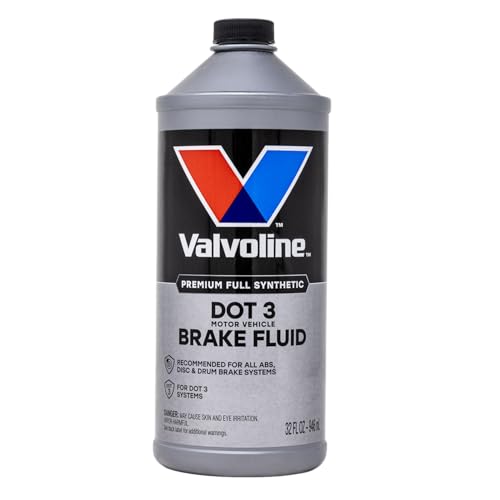
- Exceeds DOT 3 regulations: Formulated to meet or surpass DOT 3 requirements, ensuring consistent braking performance and dependable stopping power in all conditions
- Premium high boiling point: Helps prevent vapor lock and brake fade under extreme heat, maintaining safe and reliable braking even in demanding situations
- Full synthetic formula: Provides superior resistance to moisture absorption and corrosion, helping protect vital brake system components for long-lasting performance
- Superior protection and performance: Designed to deliver reliable braking under extreme temperatures while supporting the safety and efficiency of the braking system
- Recommended applications: Suitable for ABS, disc, and drum brake systems; surpasses SAE J1703, FMVSS 116, and ISO 4925 DOT 3 specifications
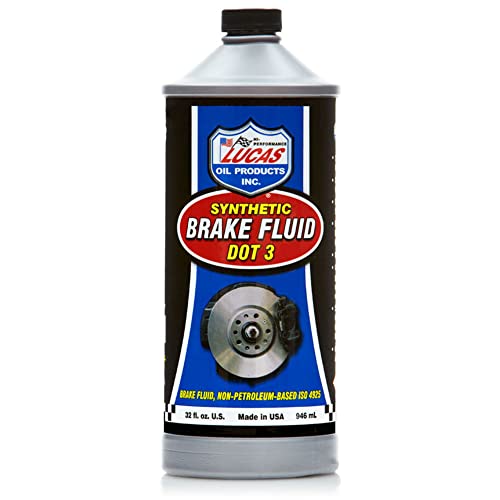
- High quality blend of polyethylene glycol ethers and additives
- Compatible with all brake system rubber components and other brake fluids
- Prevents seal hardening or softening
- Protects against rust and corrosion
- Provides excellent lubricity
This product presentation was made with AAWP plugin.